GUEST APPEARANCE · JANUARY 18, 2022 · THE JULIA & GINO SHOW
How a Children’s Book Can Carry Your Family Legacy
Julia and Gino Barbaro and I talked about the book I began for my little brother, the school audiences that taught me how children respond, the disruption that became Dinosaur House, and why a family legacy needs a form children can actually enter.
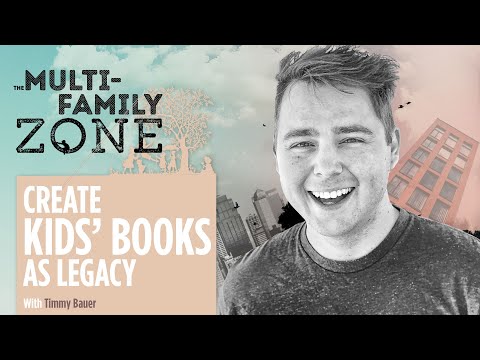
WATCH THE ORIGINAL INTERVIEW
Create Kids’ Books as a Legacy with Timmy BauerWatch on the publisher’s YouTube channel ↗Legacy is not only what an adult leaves behind. It is what a child can understand, repeat, question, and make part of their own life.
Julia and Gino invited me onto their family-centered show after we had already made Oops! The Cannolis Exploded together. That gave us an unusual conversation: we could talk about the idea of a legacy book, but we could also examine a finished project and the family collaboration behind it.
Our discussion moved from Billy the Dragon and my years performing in schools to the pandemic pivot that created Dinosaur House. The through line was connection. A children’s book works when it gives adults and children something meaningful to experience together—not when it simply shrinks an adult message and adds illustrations.
What we explored
- why I write toward an eight-year-old without excluding younger or older children;
- how “reaction triggers” make an idea memorable;
- what door-to-door school visits taught me about testing creative work;
- how the loss of touring income became the beginning of Dinosaur House;
- why a children’s book can carry a founder’s or family’s legacy;
- how parents can choose the theme while children shape the story world; and
- why stories teach differently—and often more durably—than lectures.
I Began With One Child, Not a Market
I started Billy the Dragon when I was seventeen and my little brother, Tristan, was four. I had been reading to him and thought I could make something in the spirit of the books that held his attention. Every night, I would bring him the next small piece.
That meant the first version of my creative process was immediate and personal. I was not trying to satisfy an abstract age category. I was trying to make Tristan laugh, gross him out, scare him a little, or surprise him enough that he wanted more the next night.
Those reading sessions did more than produce a manuscript. They helped form our relationship. That is still the standard underneath my work: the book should create an experience between people.
A Child Should Feel the Story
I told Julia and Gino that I usually write toward an eight-year-old. That target gives me permission to use real vocabulary, layered jokes, danger, absurdity, and ideas with some weight. Younger children can still enjoy the reactions, while older elementary readers do not feel that the book is talking down to them.
I call the moments that make the story physically felt “reaction triggers.” A page should make a child laugh, gasp, recoil, worry, point, or urgently turn to the next one. Once we know what the story needs to say, we look for ways to deliver it as a sequence of those moments.
The lesson does not disappear. It becomes more memorable because the child experienced it instead of merely receiving it.
The Audience Became My Editorial Team
After performer friends at Disney encouraged me to publish Billy the Dragon, I chose the path that gave me the most direct feedback. I illustrated and printed the book, then began literally knocking on elementary-school doors and asking to perform it.
I brought two phones and gave them to student volunteers—one for photographs and one for video. The performances showed me where attention rose, where laughter happened, and where the story needed work. The footage also helped other teachers see what an Author Timmy visit felt like.
After a visit, I would thank the teachers publicly and ask them to tag an educator at another school. That turned the response of the real audience into both creative feedback and word-of-mouth. Over several years, that process grew into a touring career with two school presentations a day in different parts of the country.
The Business Began With a Disruption
When COVID erased school touring, it erased the income model I had spent years building. But it did not erase what I knew about story design, illustration, live audiences, or the emotional mechanics of children’s books.
I encountered a children’s book by sales leader John Barrows and realized there was no clear company helping experts become the children’s-book author of their industry. I asked six entrepreneur friends whether they wanted to make the definitive children’s book for their field. Six said yes.
Dinosaur House began at that intersection: a disrupted career, an existing set of skills, and a problem I could suddenly see. The company later grew into a team of writers and illustrators, but the founding question remained simple: what does this adult understand that would be worth translating into a story children and families would choose?
Legacy Has to Enter Family Life
Gino described a children’s book as a “legacy skill”—something that can pass from one generation to the next. I like that language because it moves legacy out of the world of slogans and into a shared practice.
A founder may have a philosophy about responsibility, creativity, service, money, courage, or meaningful work. An adult book can explain it. A children’s book can give that founder a way to sit beside a child and experience the idea together.
The book does not have to become a commercial bestseller to matter. A family may make one for its own children and grandchildren. A company may use one to help employees explain their work at home. An industry leader may give an audience a story that lasts longer than a speech. In each case, the idea becomes useful because it enters a relationship.
Let Children Own the Story
One practical method we discussed is to let the adult choose the meaning and let the child help choose the world.
I might begin by asking a parent: What do you tell your child that could genuinely change the trajectory of their life—not merely get tonight’s chores done, but guide them through a difficult season years from now?
Once that becomes the theme, the child can help answer story questions. Is the hero a person, pony, fairy, dinosaur, or something stranger? Where does the story happen? What does the character want? What keeps getting in the way? If the adult’s theme is “be careful who you surround yourself with,” the child can still invent the hero, desire, setting, friends, and danger.
That participation gives the child ownership of the story—and therefore a different relationship with the idea inside it.
Stories Travel Farther Than Lectures
As a Christian, I think often about how frequently Jesus taught through stories. A story lets the listener enter a situation, see consequences, and reach understanding without being handed only an instruction.
Even an everyday lesson can work this way. “Do not leave dirty dishes in the sink” is easy to ignore. A vivid little story about cockroaches climbing out at night to feast on gross leftovers is harder to forget. The image follows the instruction into the child’s imagination.
A legacy book needs that same discipline. The purpose matters, but purpose is not a substitute for plot, character, humor, tension, and surprise. If we want the idea to travel, we have to make a story worth carrying.
What It Takes to Build the Book
At the time of the interview, I described Dinosaur House as a full-service process. We used a series of conversations to uncover the client’s idea, audience, preferences, and voice. A writer developed the manuscript with the client, illustrators built the visual world, and the finished book was prepared for publication while the client retained ownership.
Julia and Gino emphasized that the process felt joyful rather than isolating. Their children contributed ideas, the story created family conversations, and the finished characters gave them a new language for talking about choices, responsibility, failure, creativity, friendship, and forgiveness.
That result is why the process cannot be only “put the expert’s advice into rhyme.” We have to discover the human belief underneath the expertise, then build a complete children’s story around it.
The Legacy Question I Would Start With
If you are considering a book for your family, audience, or industry, I would not begin with a title or a character. I would begin here:
What do I understand now that I hope a child I love will still remember when life becomes difficult?
Then ask what story could help that child feel the truth before they need to explain it.
That is the opportunity I see in children’s books. They can carry expertise, but they can also carry affection. They can preserve a belief without freezing it into a lecture. And when children help shape the story, a legacy stops being something adults announce and becomes something a family creates together.
Original Interview and Attribution
This first-person article is based on my appearance on The Julia & Gino Show. Julia and Gino Barbaro and their team published the original interview, video, episode outline, and show notes.